Project Highlight: Combe Fill South Superfund Site
Steven Ivan
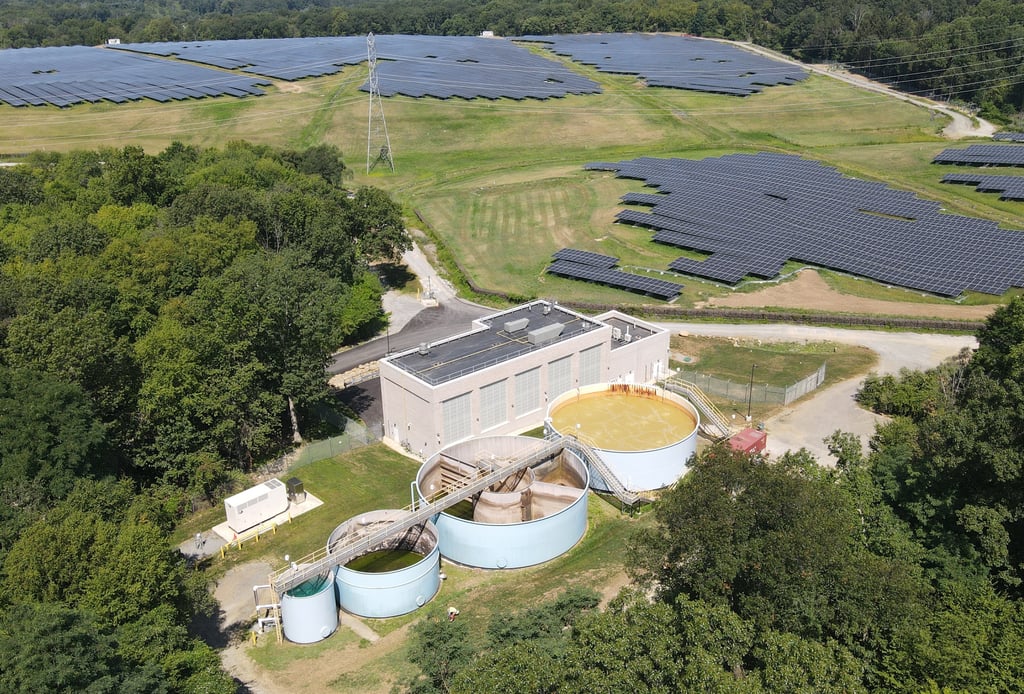

Combe Fill South Landfill Superfund Site, Chester, NJ
When our team joined the Combe Fill South Landfill project, the site was in the middle of a major transition. Construction had just started on a new groundwater treatment facility—an essential piece of the EPA’s long-running cleanup effort. The landfill, once used for municipal and industrial waste, left behind a complex mix of contaminants that impacted both shallow and deep groundwater. The EPA divided the cleanup into two phases: Operable Unit 1 (OU1) focused on containing and treating the shallow groundwater around the landfill, while Operable Unit 2 (OU2) dealt with the deeper aquifer still under evaluation.
Our work supported the federal contractor responsible for upgrading the OU1 Groundwater Extraction and Treatment (GWET) system and implementing interim measures for OU2. These upgrades included new deep extraction wells, process piping, treatment tanks, and a control system designed to maintain containment and provide performance data for the deeper aquifer.
From the start, we were involved in the technical side of construction support—processing RFIs, reviewing submittals, and catching design conflicts before they reached the field. One of the early challenges was coordinating the layout of new process piping within tight existing corridors. The original design needed adjustments to fit new pump skids, containment curbs, and conduit runs while maintaining clear access for maintenance. We worked through redesigns and drawing markups, balancing constructability, safety, and compliance with EPA and NJDEP standards.
Another challenge involved integrating the deep extraction wells with the upgraded treatment system. The wells extended into a fractured bedrock aquifer with variable yields and chemistry, which required close coordination between drilling crews, engineers, and the treatment plant operators. Our team reviewed and updated well connection details, ensuring the piping network could handle variable flow conditions without causing system pressure fluctuations or overloading the treatment process.
Documentation was another major focus. We handled submittal reviews for mechanical and electrical components, coordinated QC comments, and kept information flowing between the field and design offices. To improve progress tracking, we used drone photography to capture site conditions, confirm grading and utility routing, and document construction milestones. The imagery proved invaluable for verifying as-built dimensions and quickly communicating field changes to the design team.
As construction advanced, a solar array was installed on the capped landfill to offset the treatment plant’s energy demand—a small but meaningful step toward sustainable site operations. By the time the GWET system reached substantial completion in April 2025, the facility was fully functional and ready to begin its one-year operational and functional period.
The project demonstrated how practical engineering, close coordination, and adaptable design can bring order to a complex remediation effort. Our team’s role—bridging design intent with field execution—helped keep the work compliant, efficient, and ready for the next phase of long-term monitoring and handoff to NJDEP.
Cavini Consulting Group, LLC
Expertise in civil and environmental engineering solutions.
© 2025 Cavini Consulting Group, LLC. All rights reserved.